HPLC-CAD Analysis of Ursodeoxycholic Acid




 Instrumax (Tianjin) Co., Ltd.Instrumax (Tianjin) Co., Ltd.
Ursodeoxycholic acid (UDCA), chemically 3α,7β-dihydroxy-5β-cholestan-24-oic acid, is an odorless, bitter organic compound. It is used medically to increase bile acid secretion, alter bile composition, reduce cholesterol and cholesteryl esters in bile, and support gradual dissolution of cholesterol in gallstones.
CAS Registry No. 128-13-2; EINECS/EC No. 204-879-3; molecular weight 392.572.
In the 2020 edition of the Chinese Pharmacopoeia, related substances of ursodeoxycholic acid are examined by thin-layer chromatography, while the assay/content is determined by titration. This application develops a charged aerosol detection method to improve practicality, repeatability, impurity-detection capability and quality-control support.
A Charged Aerosol Detector (CAD) is a near-universal, mass-sensitive detector for non-volatile and semi-volatile analytes. CAD response is not governed by molecular structure, and the analyte does not need to be ionized. Under comparable conditions, samples with the same absolute analyte mass give broadly comparable responses, supporting low detection limits and high sensitivity.
Instrument: Agilent 1200 liquid chromatograph + Instrumax CADetector a1 Charged Aerosol Detector.
Reagents: ammonium acetate, purified water (Watsons distilled water), methanol (chromatographic grade), formic acid (analytical grade).
Samples: UDA21 and UDP2451 supplied by the customer; UDP2451 is a crude product.
Column: ODS Hypersil 125 × 4 mm, 3 μm. Column temperature: 40 °C. Flow rate: 0.8 mL/min.
Injection volume: 10 μL.
Mobile phase A: 5 mmol/L ammonium acetate + 0.1% formic acid in water. Mobile phase B: methanol.
Instrumax (Tianjin) Co., Ltd.Gradient conditions:
Time (min) | A | B |
0 | 40 | 60 |
20 | 10 | 90 |
30 | 10 | 90 |
30.1 | 40 | 60 |
40 | 40 | 60 |
Gradient A/B ratios: 40/60, 10/90, 10/90, 40/60, 40/60.
CAD conditions: Instrumax CADetector a1; drift tube temperature 40 °C; nebulizing gas flow 3 L/min; corona/charging current 1 μA; charging gas flow 1 L/min.
Diluent: methanol/mobile phase A (70:30).
Weigh approximately 20 mg of sample into a 10 mL volumetric flask, dissolve with methanol, and dilute to volume with 70% diluent to obtain about 2 mg/mL.
Instrumax (Tianjin) Co., Ltd.Prepare the UDA21 1% reference/control sample at 20 μg/mL.
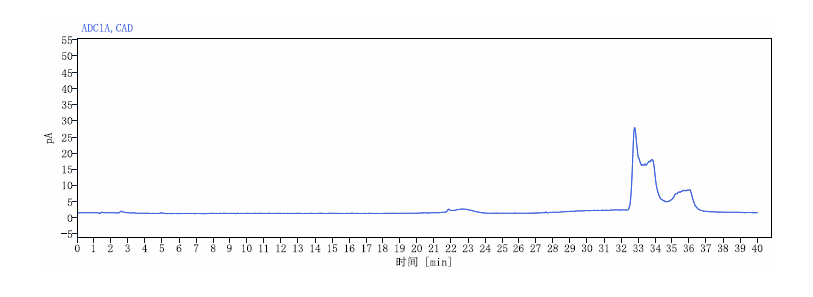
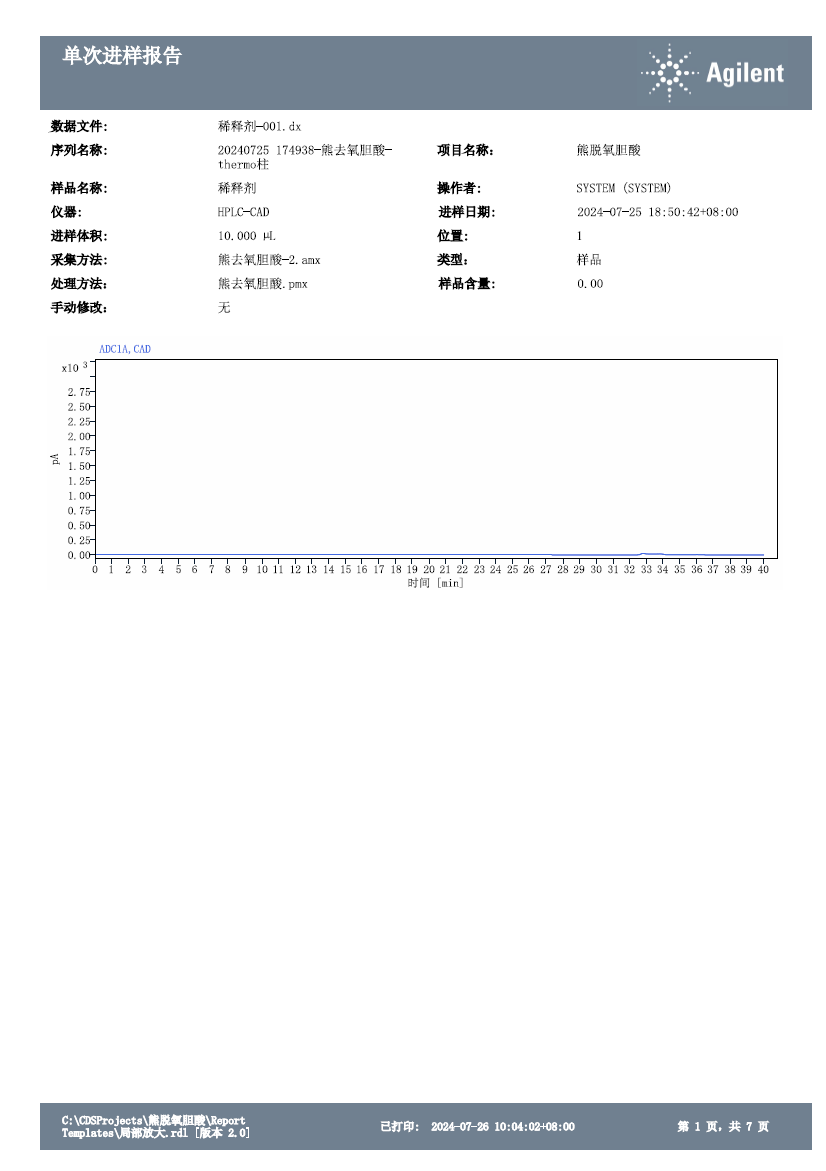
Note: each sample includes a local chromatogram zoom.
 Instrumax (Tianjin) Co., Ltd.
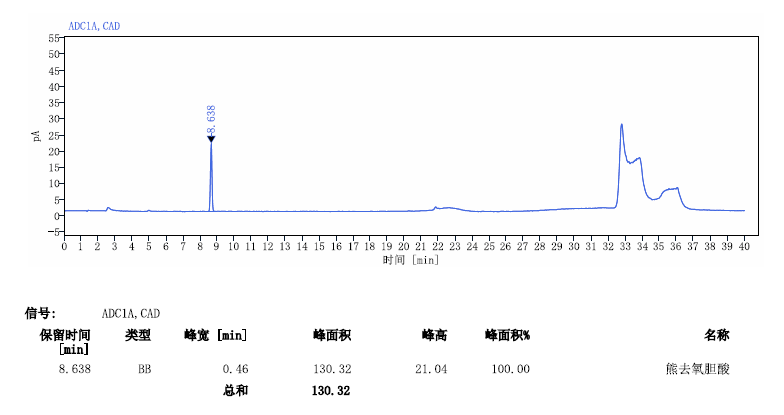
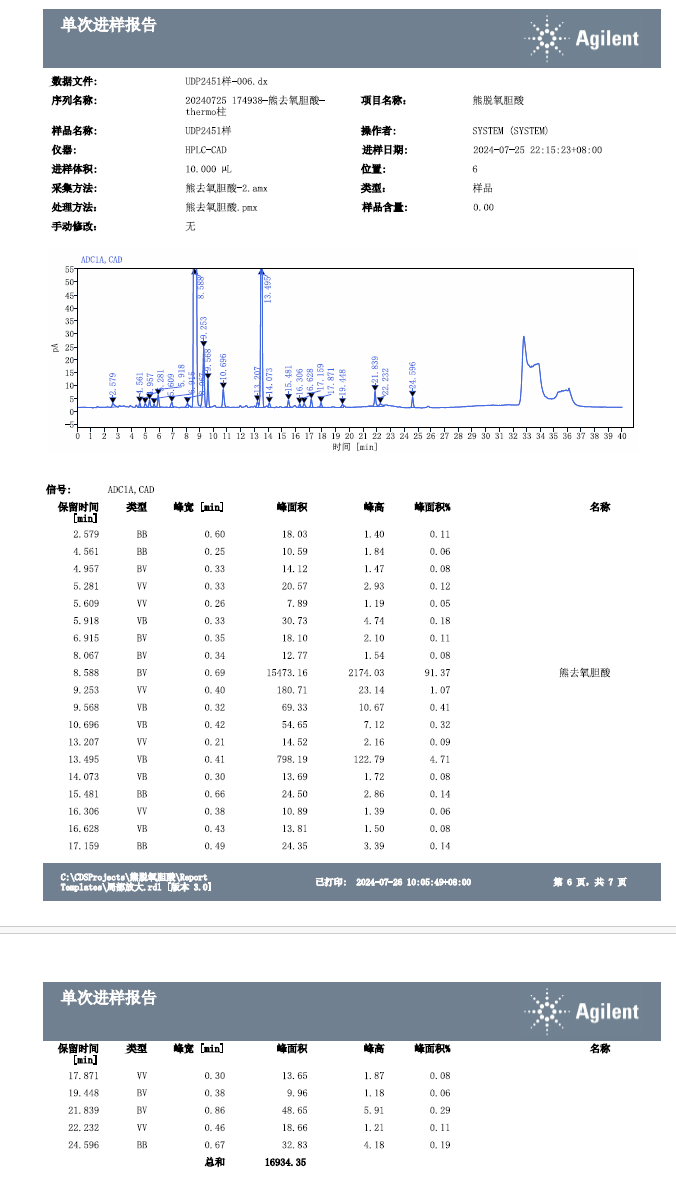
The CAD response for UDA21 and UDP2451 samples was evaluated under the above HPLC-CAD conditions. The chromatograms show that ursodeoxycholic acid and related impurity signals can be observed clearly.
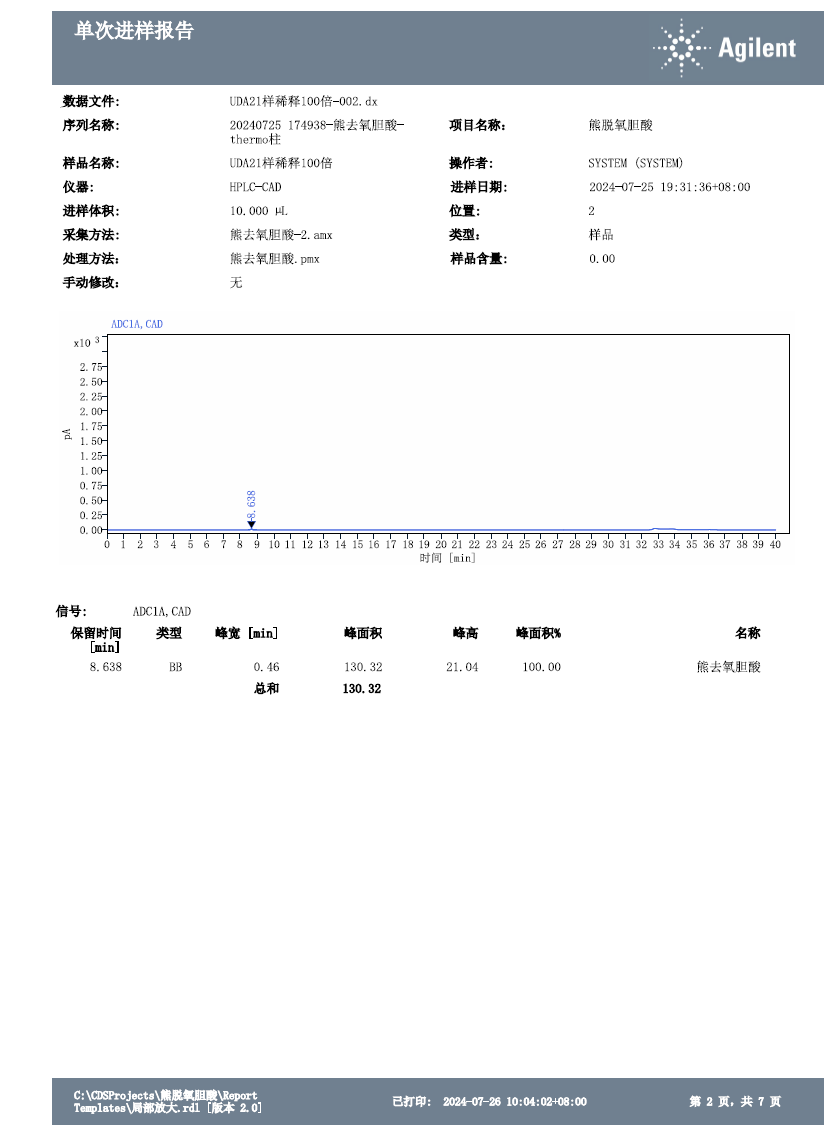
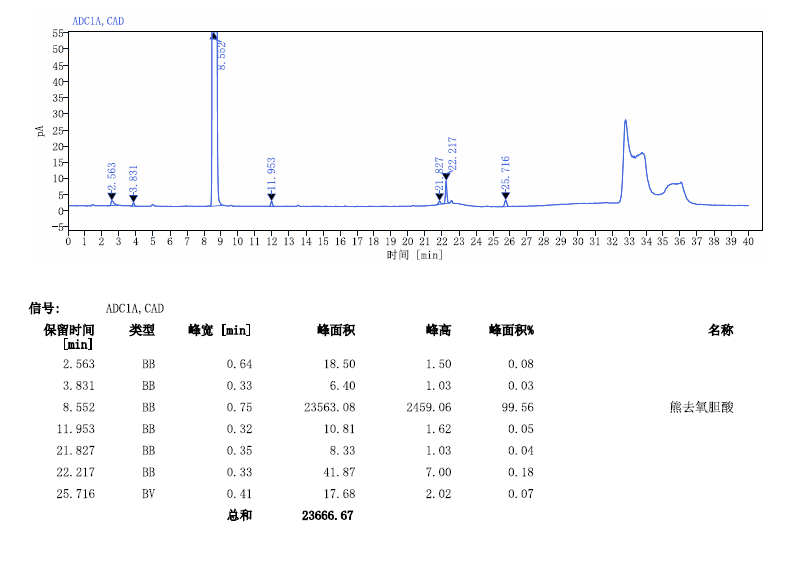 Instrumax (Tianjin) Co., Ltd.
Chromatogram details for UDP2451 and the crude-product sample support method evaluation and impurity monitoring.
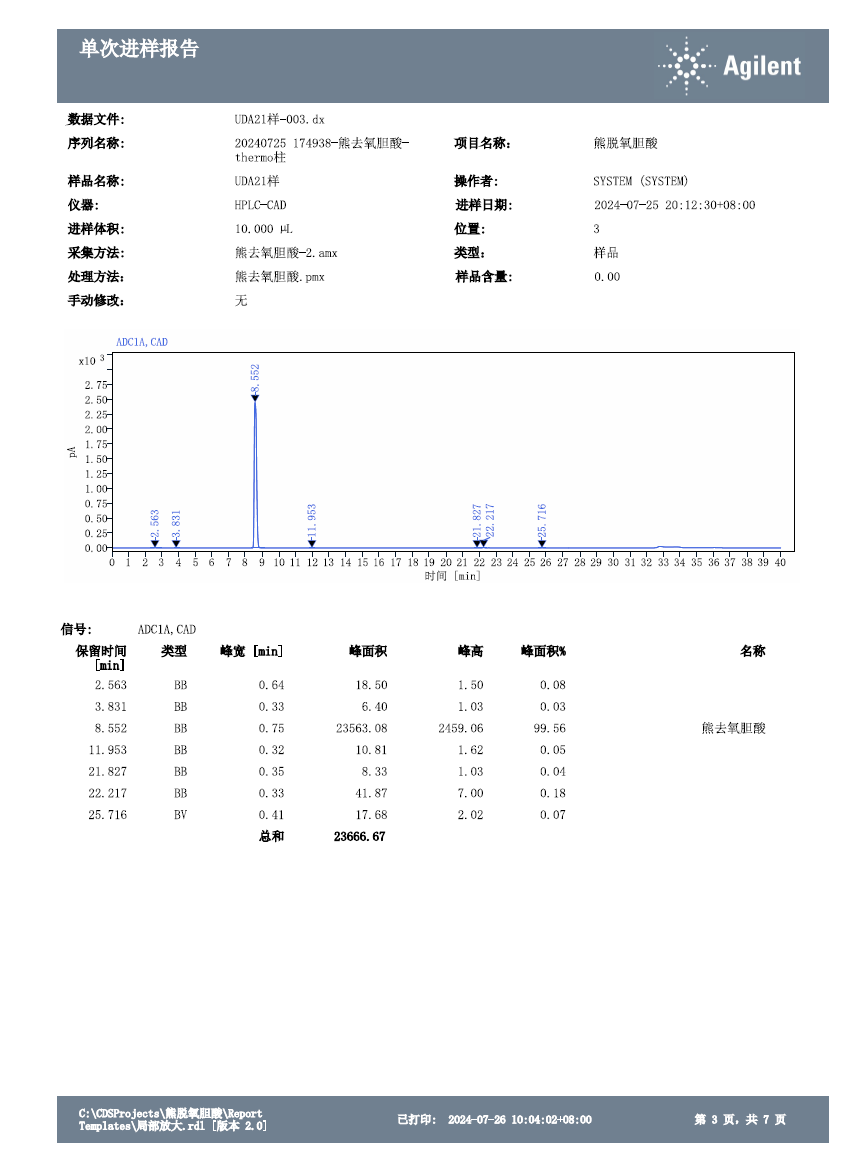 Instrumax (Tianjin) Co., Ltd.
The overlay and zoomed chromatograms provide additional evidence of response behavior and impurity detection capability.
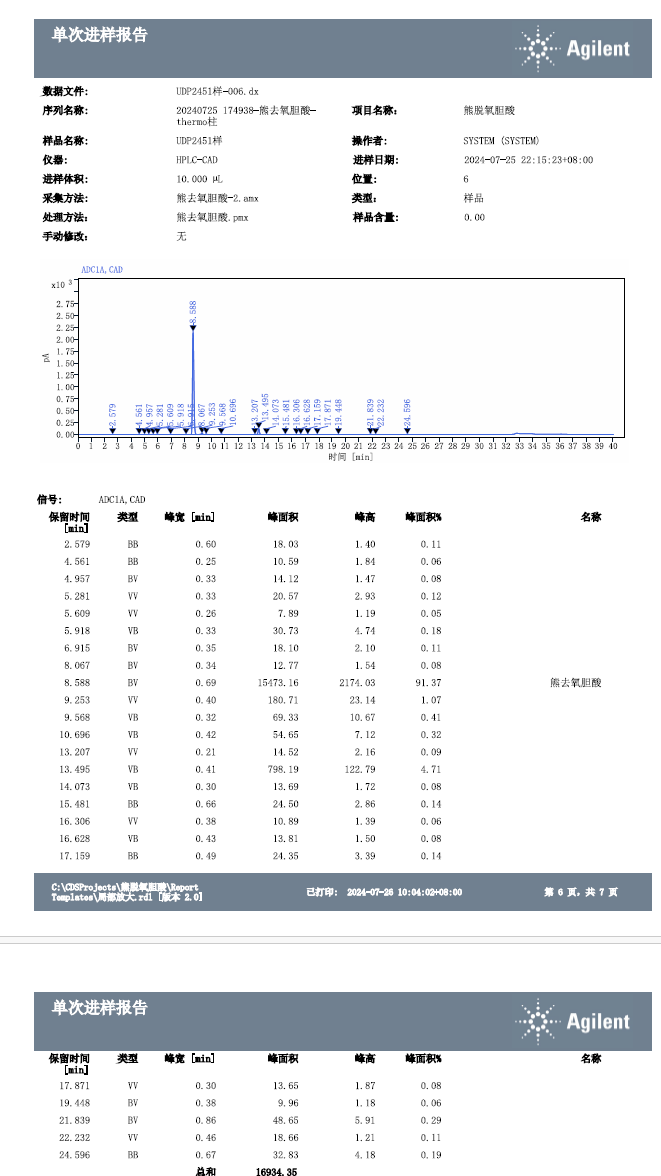 Instrumax (Tianjin) Co., Ltd.
The chromatographic data show practical response for ursodeoxycholic acid and related impurity peaks under CAD detection.
 Instrumax (Tianjin) Co., Ltd.
CAD gave a good response for ursodeoxycholic acid, and impurities were effectively detected.
The CAD detector can provide data support for process optimization and quality control of ursodeoxycholic acid. The HPLC-CAD method is straightforward, specific and sensitive, and can be used for quality control and evaluation of ursodeoxycholic acid.