




CAD ApplicationAnalysis of Cough Syrup Ingredients
Eyes for exploring the unknown world

1. Application Background
Experimental background and conditions
Determination of specific sugar components (fructose, glucose and sucrose) in cough syrup provides deeper information for refined quality control, scientific production processes, transparent product labeling, and accurate anti-counterfeiting verification.
With high sensitivity, good repeatability and excellent linearity, CAD is an effective tool for carbohydrate analysis.
Experimental purpose
HPLC-CAD analysis of specific sugar components in cough syrup
Sample information
Fructose, glucose and sucrose reference standards; cough syrup sample
Instrument information
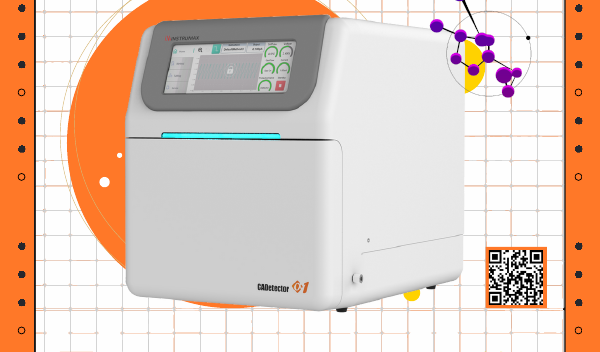
Agilent 1200 liquid chromatograph + INSTRUMAX Charged Aerosol Detector (CAD)
(INSTRUMAX CADetector a1)
2. Application Content
Charged Aerosol Detector (CAD) Conditions
Experimental method
Column: sugar column, 5 μm, 4.6 × 250 mm
Mobile phase: acetonitrile/water (77:23)
Flow rate: 1.0 mL/min
CAD conditions
Drift tube temperature: 35 °C
Atomizing air flow: 3 L/min
Charging air flow: 1 L/min
Gain: 0.05
RF: 2.0
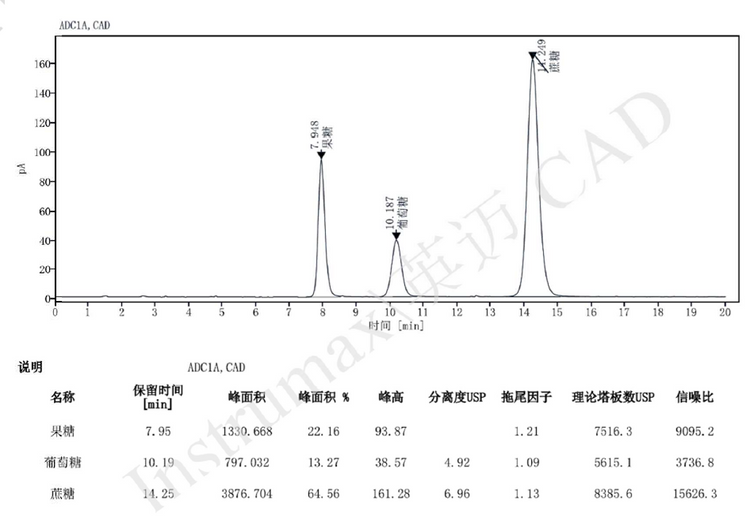
The three sugars are well separated, with sharp peak shapes, high column efficiency and high detection sensitivity.
Linearity
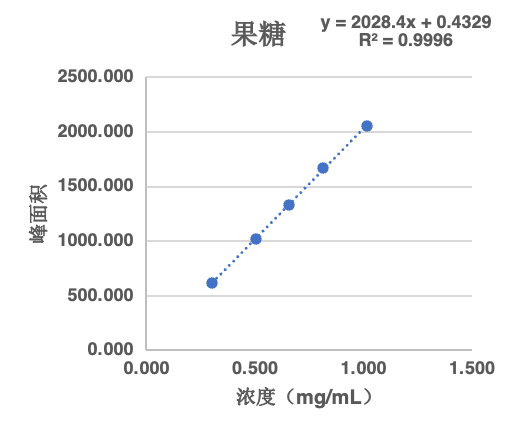
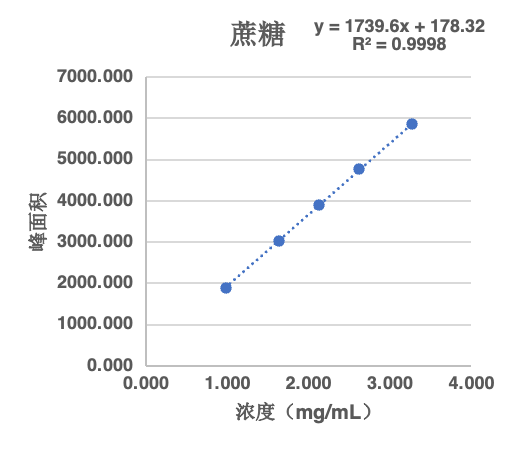
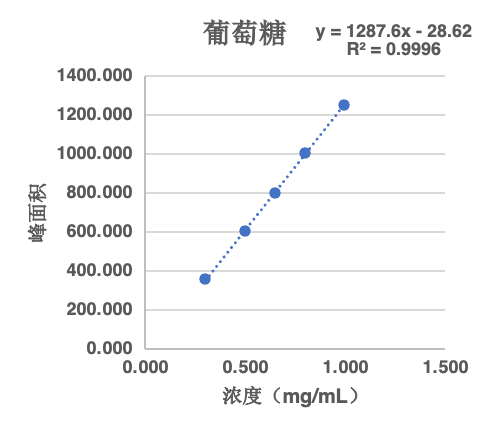
The correlation coefficients (R) for all three sugars are greater than 0.999.
Injection precision
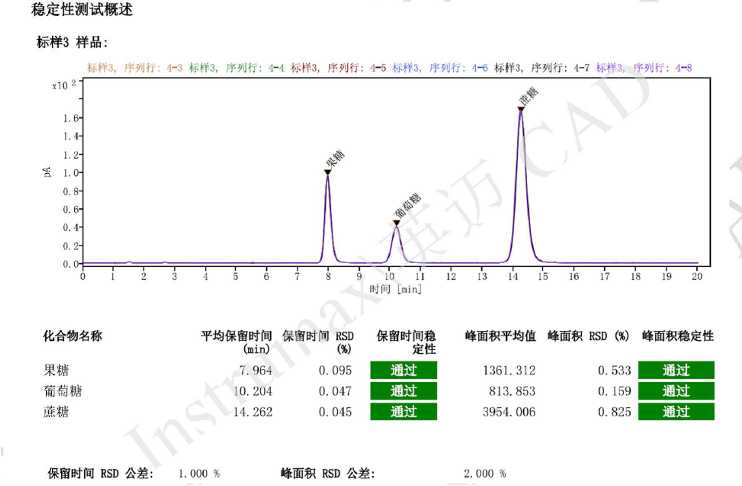
For six consecutive injections, the RSD of the peak areas for all three sugars is less than 1.0%.
Sample analysis
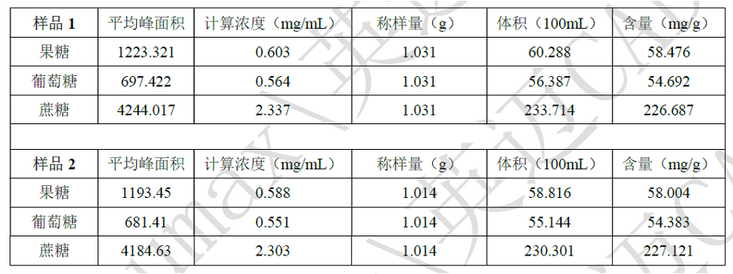
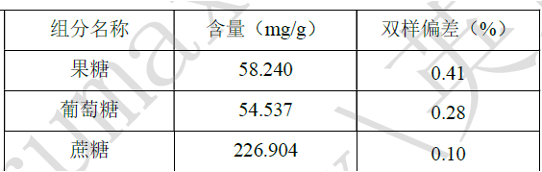
Duplicate samples with duplicate injections showed accurate assay results with small deviation.
3. Experimental Conclusion
This study uses HPLC-CAD to determine sugar components in cough syrup. CAD offers high sensitivity, good repeatability and excellent linearity, making it an effective tool for sugar analysis. The method is simple to operate and produces accurate, reliable results, providing strong instrument and method support for carbohydrate determination.